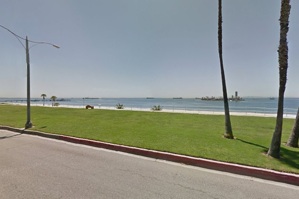
Design Objectives:
Public Safety —Every law enforcement representative makes the same statement... the enemy of crime is lighting and visibility. The park’s lighting and new bench design focuses on these two safety measures. The existing solid concrete benches, which according to Police, provide excellent hiding places, will be replaced by historic wrought iron benches (see Promenade Details). The open wrought iron design gives a clear view of any activity on or behind the bench. The CPTED (Crime Prevention Through Environmental Design) Police expert comments have been written after reviewing details of the Bluff Park Promenade project. Crime stats on residences across the street from the park shows a high level of incidents, compared with the rest of the Bluff Park and parts of Bluff Heights Crime Reporting Districts (see Public Safety page).
User-Friendly —The grass area remains mostly untouched so its users are not effected, and the walkway at the bluff’s edge and beach stairs will widen in order to create better usage for pedestrians. It is unfortunate that such a significant oceanfront treasure is noticeably unfriendly to pedestrians with its narrow walkway and staircases, and lack of lighting for a safe evening stroll.
The existing walkway is 5 feet wide, just wide enough to accommodate two people side by side. Others trying to pass must step off the pavement onto the grass. This is not a user-friendly environment. The plan suggests widening the walkway by five feet, which will provide the same width as other parks’ main sidewalk (see Promenade Details).
Historic Bluff Park —This project would have been easier to move forward if less expensive modern lampposts were used. But to maintain continuity with the adjacent Bluff Park historic neighborhood, and help create a more sophisticated setting, the lampposts are exact replicas of the 1st Street lights and the present Bluff Park Historic Lamppost Project. Initially double-headed vintage lampposts were planned, due to the historic trend of placing such lights in prime locations, but were changed to 1st Street-style single head, in order to reduce cost. The sight of seventy six historic lampposts in a straight row along the bluff creates a magnificent vista, often seen in distinguished oceanfront settings around the world’s promenades (see Promenade Details).
Compatibility —People view Bluff Park in varied ways, and it holds different meanings to different people. All are important. A successful plan addresses all these issues in order to make it compatible with the varied interests. In order to create such a plan, these five areas were studied and addressed in the design process:
a. A safer environment —Consulting with police and lighting experts on safety for park users and the adjacent community.
b.Support existing activities —The grass area is practically untouched, and a more user-friendly wider walkway and beach stairs, all meant to enhance present activities.
c.Open view —No tall planters to block the view. Flora along the walkway and park entrances designed to bring color without blocking views. The lampposts, about six per block, will have less effect on the open ocean view than the existing trees and streetlights in the park and Ocean Blvd.
d. Continuity with the historic community —Historic lampposts to fit in with those in the Bluff Park neighborhood, and other period components such as benches and bus stops.
e. Reduce impact on Ocean Boulevard residents —The LED lights are designed to point downwards, and be dimmer in intensity and warmer in color than most LED lights you see around (see chart in Promenade Details). The brightness is the same as the lights on Bluff Park’s 1st Street, but distance of lampposts to the homes across Ocean Boulevard is over four times that of the homes on 1st Street. So the light output is lower and focused downwards, in order to get the necessary coverage for public safety, without affecting nearby residents.
Funding Resources — Available funding sources is key. Since this project is within the Tidelands Fund coverage area (funding from oil production revenue that can be used only along the shore or bay), the Promenade Project will be funded by this source. Although public safety is an important component of this project, City general fund revenues designated for lighting, public safety and infrastructure could have been tapped, but it has been decided that no other City funding will be used. While striving for high quality results, we understand that reasonably priced projects have a better chance of becoming a reality. The total project is estimated at under $1.5 Million, not very expensive when it comes to public projects. The project has already been approved by City Council, and around $800,000 seed money allocated. This seed money can get segments of the project started, and continue as more Tidelands funding becomes available.
Raising the Bar — A longer-term vision that is not part of this project is a Sculpture Garden. A renowned public sculpture collection (about the scale of The Lone Sailor statue), placed intermittently along the grass without any fencing, leaving most of the lawn area available for activities (see Sculpture Garden). The public art will be sought from private collections and corporate resources, and selection of the art will be juried by a committee of experienced art curators. What’s good about such a sculpture collection is that while renowned and celebrated, it’s not a big draw for crowds. This will put little to no burden on the community (as the Long Beach Museum of Art has no negative affect on the surrounding neighborhood), and will increase the Bluff Park and Long Beach brand even more.
Design Process — From the start and all along the design process, present park usage and impact on surrounding residents were the focus of attention. The idea was conceived by Isaac Waksul, a Bluff Park resident and initiator of a number of past community projects. This plan was developed with the help of qualified people from various related areas, including community members and park users, park lighting experts, park architects, law enforcement experts, Tidelands Fund management, and others.